

 English
 عربى
عربى Deutsch
 Español
 Français
 русский
 日本語
日本語 简体中文
简体中文Content
- 1 What Is an Elevator Background Board and Why Does Material Selection Matter?
- 2 Stainless Steel: The High-Traffic Standard
- 3 High-Pressure Laminate (HPL): Design Flexibility at Controlled Cost
- 4 Wood Veneer: Classic Luxury for Villa and Residential Elevators
- 5 Tempered Glass and Mirror Panels: Expanding Space and Adding Drama
- 6 PVC Composite and Aluminum Alloy Panels: Lightweight Practical Options
- 7 Material Comparison at a Glance
- 8 Key Factors to Evaluate Before Making Your Choice
- 9 Surface Treatments and Customization Options
- 10 Making the Right Investment
The elevator background board is one of the most visible and frequently touched surfaces in any residential or commercial lift. Get the material right, and you have a panel that looks elegant for decades with minimal upkeep. Get it wrong, and you face warping, discoloration, or costly replacements within a few years. This guide breaks down the leading material options, how each performs under real-world conditions, and which choice best suits your building type and design goals.
What Is an Elevator Background Board and Why Does Material Selection Matter?
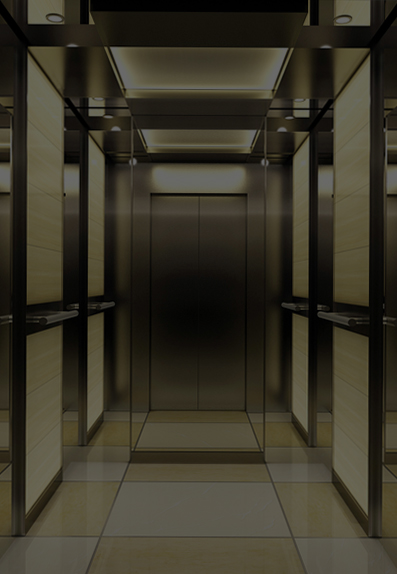
An elevator background board — also called a back panel or rear wall panel — is the decorative and protective surface installed on the interior rear wall of an elevator car. It serves a dual purpose: shielding the structural wall from daily impact and creating a finished aesthetic that passengers see every time they ride.
Unlike a simple decorative film, a quality background board is load-bearing enough to support handrails, control panels, mirrors, and lighting components. The material you choose directly determines durability, fire resistance, weight load, and long-term maintenance cost — making this one of the most consequential decisions in any elevator fit-out or renovation project.
Standard background boards range from 2,000 mm to 2,800 mm in height and are custom-cut to the exact dimensions of each elevator car. Panel thickness typically spans 6 mm to 18 mm depending on the core composition and the structural load requirements.
Stainless Steel: The High-Traffic Standard
Stainless steel is the most widely used material for elevator background boards across commercial buildings, hospitals, hotels, and luxury residences. The reasons are straightforward: exceptional corrosion resistance, high impact strength, and surfaces that tolerate repeated cleaning with chemical agents without degrading.
Grade 304 stainless steel is the industry standard for most environments. For coastal installations or locations with elevated humidity, Grade 316 offers superior resistance to salt and moisture-driven corrosion. Finish options are extensive — mirror, hairline, brushed, satin, and etched — allowing architects to adapt the same base material to dramatically different aesthetic registers.
From a cost perspective, a typical stainless steel background board runs between $200 and $600 per panel depending on finish complexity. While the upfront investment is higher than laminate options, the lifecycle value is strong: scratch-resistant coatings extend the panel's visual lifespan without frequent refinishing, and smooth non-porous surfaces simplify daily cleaning routines.
One practical note: stainless steel panels of standard dimensions (approximately 2,400 mm × 1,200 mm) weigh 25–35 kg each. Installers must verify that the additional weight remains within the elevator's rated load capacity before specifying this material.
High-Pressure Laminate (HPL): Design Flexibility at Controlled Cost
High-pressure laminate panels are a strong choice for residential buildings, boutique hotels, and executive office environments where warmth and design variety matter as much as raw durability. HPL is engineered by bonding multiple layers of resin-saturated kraft paper under high heat and pressure, producing a surface that resists scratches, stains, moisture, and abrasion.
The design range is virtually limitless: solid colors, wood-grain patterns, stone-effect prints, geometric textures, and custom printed graphics are all achievable. Quality laminate panels typically cost $150–$400 per panel, making them a budget-conscious alternative to metal or glass without sacrificing a polished appearance.
Durability, however, depends heavily on choosing the right grade. High-pressure laminate expands and contracts with humidity changes, maintaining structural integrity over time — with a service life of up to 15 years in well-maintained environments. Low-pressure laminate, by contrast, can peel from its substrate over time and is more vulnerable to scratching, resulting in higher long-term replacement costs despite the lower initial price.
For elevators in healthcare or hospitality settings, non-porous HPL resists microbial growth, and fire-rated laminate options are available to meet Class A flame spread requirements for public buildings.
Wood Veneer: Classic Luxury for Villa and Residential Elevators
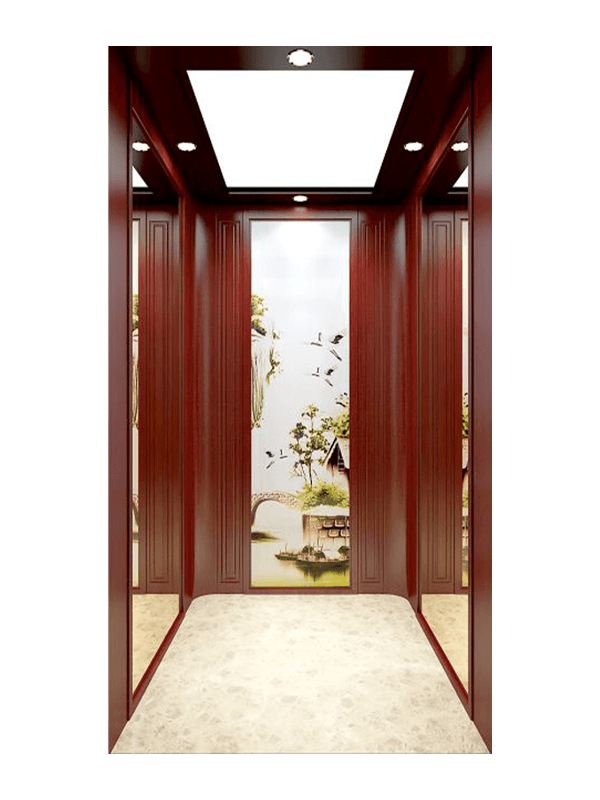
Carved or natural wood veneer background boards occupy the premium tier of residential elevator design. They communicate warmth, craftsmanship, and individuality in a way that engineered materials rarely replicate. For villa and private residence elevators, wood veneer is frequently paired with bespoke carved patterns or inlaid details that make the elevator a genuine design focal point rather than a utility.
Genuine wood veneer panels range from approximately $300 to $800 per panel. The trade-off for aesthetic richness is more careful maintenance: wood-based panels require moisture-resistant treatments, particularly in humid climates or coastal environments where untreated natural materials are prone to warping and discoloration.
Modern manufacturing addresses this through moisture-resistant composite cores and protective coating systems that allow wood veneer boards to perform reliably even in challenging environments. When selecting wood veneer for a villa elevator background board, confirm that the supplier uses engineered substrates (such as moisture-resistant MDF or plywood) rather than solid wood cores, which are far more susceptible to movement with seasonal humidity changes.
Tempered Glass and Mirror Panels: Expanding Space and Adding Drama
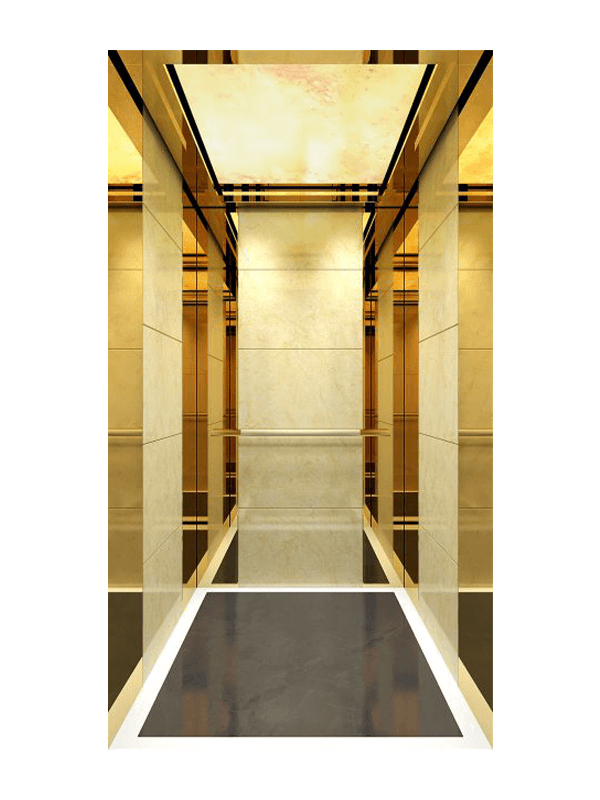
Tempered glass and mirror background boards are most effective in compact elevator cars where expanding the perceived volume of space is a priority. A full-height mirror or backlit glass panel transforms a narrow cabin into an environment that feels open and refined — an effect no opaque material can replicate.
Modern glass panels are laminated assemblies: multiple tempered layers bonded with safety interlayers ensure that if the panel is ever damaged, it holds its position rather than shattering into hazardous fragments. This is a mandatory safety consideration under most building codes, including ASME A17.1 in North America and EN 81 in Europe.
Glass panels are heavier than laminate alternatives — a 2,400 mm × 1,200 mm glass panel typically weighs 40–60 kg — so structural load calculations are essential before specifying this material. When paired with LED backlighting, glass boards create dramatic ambient effects that significantly elevate the perceived quality of the elevator interior. This integration is particularly popular in luxury villa elevator car decoration projects where the lift is designed as an architectural statement.
PVC Composite and Aluminum Alloy Panels: Lightweight Practical Options
PVC-based composite panels offer a lightweight, cost-effective solution for residential and low-to-medium-traffic commercial elevators. When reinforced with composite cores, these boards provide adequate rigidity and their inherent moisture resistance makes them well-suited to coastal or high-humidity environments where untreated metal surfaces require additional protective treatment.
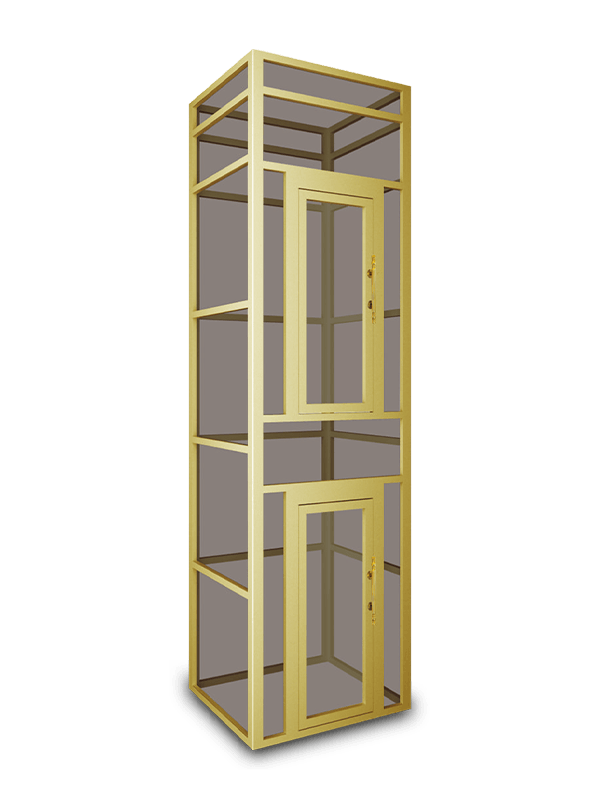
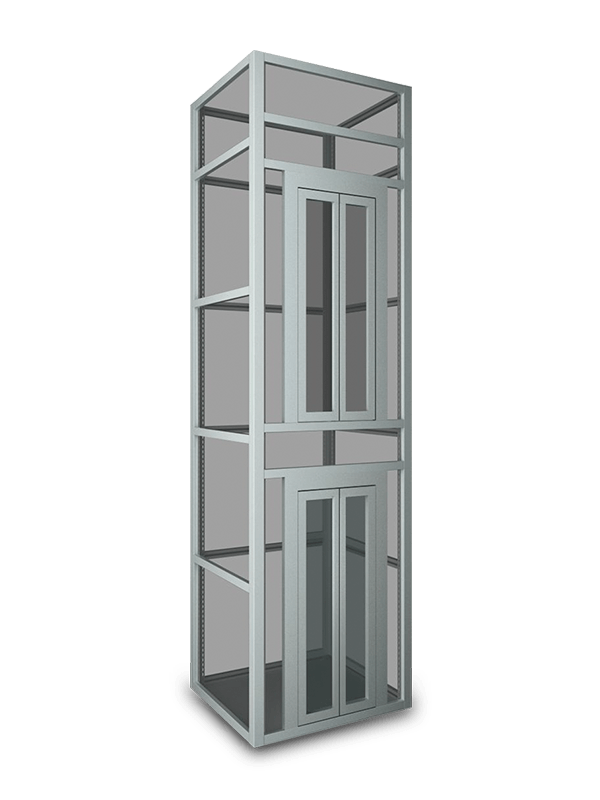
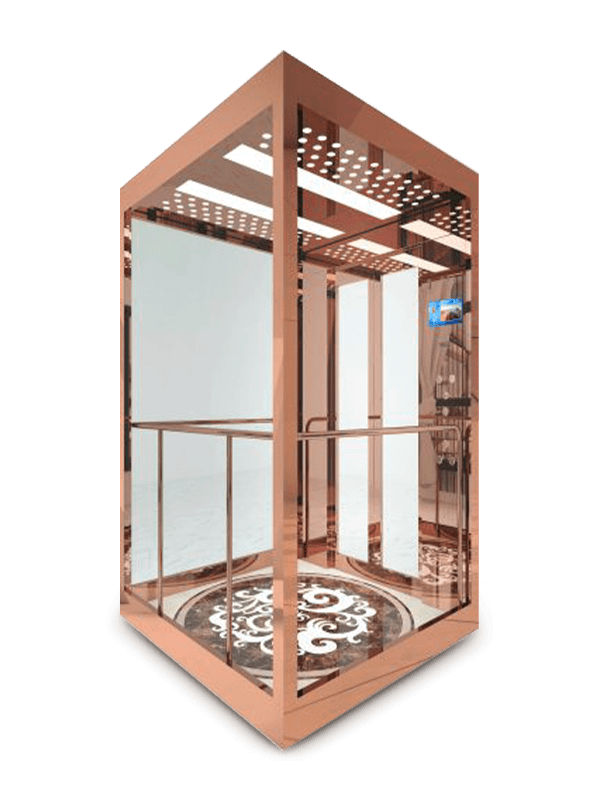
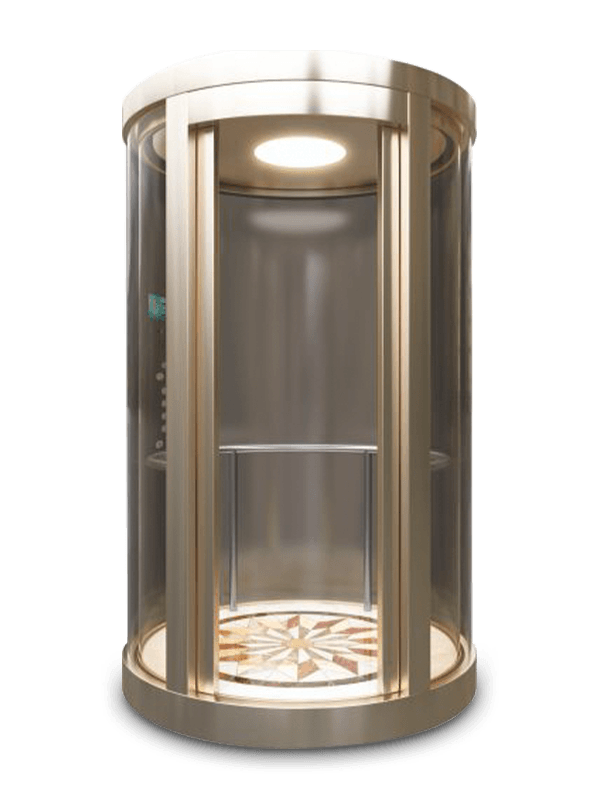
Aluminum alloy frames and panels bring a different set of advantages: they are significantly lighter than steel while offering excellent corrosion resistance and a long service cycle. Industrial-grade aluminum hoistway frames with safety laminated glass, for example, combine structural integrity with good light transmission — a configuration common in panoramic residential elevator designs.
The trade-off for aluminum decorative paneling is lower abrasion resistance compared to stainless steel. Aluminum and bronze surfaces are more susceptible to damage from sharp objects and heavy impacts, which means they are best reserved for environments with controlled access rather than high-traffic public lobbies.
Material Comparison at a Glance
| Material | Durability | Best For | Approx. Cost / Panel | Key Advantage |
|---|---|---|---|---|
| Stainless Steel (304/316) | Excellent | Commercial, hospital, hotel | $200–$600 | Corrosion resistance, easy cleaning |
| High-Pressure Laminate | Good (up to 15 yrs) | Residential, office, boutique hotel | $150–$400 | Design flexibility, budget-friendly |
| Wood Veneer | Good (with treatment) | Luxury villa, private residence | $300–$800 | Warmth, craftsmanship, prestige |
| Tempered Glass / Mirror | Good | Compact cabs, panoramic lifts | Varies (premium) | Space expansion, backlit effects |
| PVC Composite | Moderate | Residential, humid climates | Budget | Lightweight, moisture resistant |
| Aluminum Alloy | Moderate | Panoramic, low-traffic residential | Moderate | Light weight, corrosion resistance |
Key Factors to Evaluate Before Making Your Choice
No single material is universally correct. The right elevator background board depends on a combination of building-specific factors that must be evaluated together rather than in isolation.
- Traffic volume: High-passenger-flow environments in commercial buildings demand the impact and scratch resistance of stainless steel or compact laminate. Residential villa elevators with controlled access have far more material options available.
- Environmental conditions: Coastal locations, high-humidity interiors, and environments exposed to cleaning chemicals require materials with appropriate moisture and corrosion resistance — Grade 316 steel, moisture-treated wood veneer, or PVC composite are the primary candidates.
- Fire compliance: Public buildings in most jurisdictions require non-combustible or fire-retardant materials rated as complete assemblies (surface, adhesive, and core together). Always verify that your chosen board meets local fire code requirements — typically Class A flame spread rating.
- Weight load: Panel weight must be factored into the elevator's total rated capacity. Glass and stone-effect panels are significantly heavier than laminate or aluminum, requiring structural load verification before specification.
- Design integration: The background board should complement the overall interior architecture of the building. A luxury villa benefits from wood veneer or backlit glass; a corporate office building typically chooses brushed stainless steel or minimal laminate to project professionalism.
- Long-term maintenance: Smooth, non-porous surfaces reduce cleaning effort and resist staining. Factor in replacement panel availability and standardized dimensions — modular systems that allow individual panel removal without dismantling the entire cabin reduce downtime during future maintenance.
Surface Treatments and Customization Options
Beyond base material selection, surface treatments dramatically expand the aesthetic range of elevator background boards without changing the underlying structural performance. Understanding these options helps you align the functional material choice with your specific design vision.
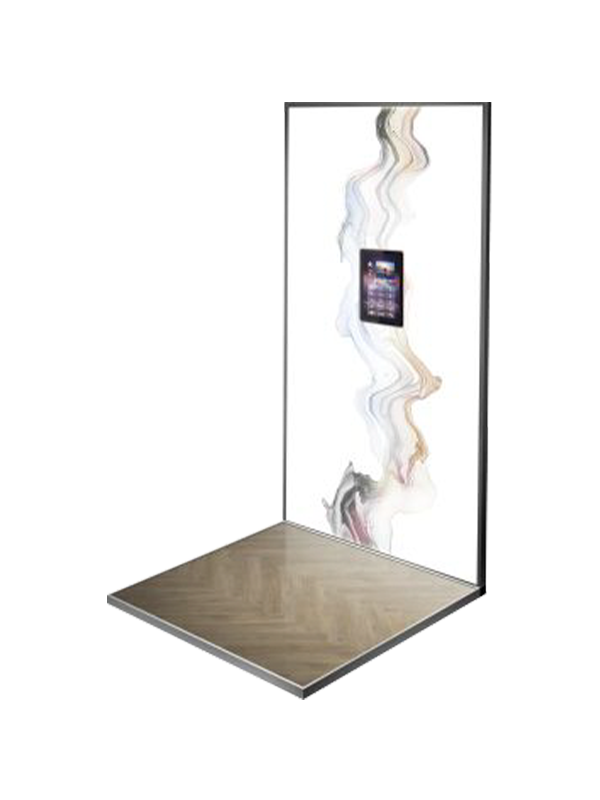
Etching — whether chemical or laser — creates permanent decorative patterns in metal or glass surfaces and adds $50–$200 to the per-panel cost while producing a result that cannot be replicated by film or coating. Digital printing technology enables high-resolution photographic or branded imagery on laminate and specially coated metal panels, opening the door to fully customized feature walls. Textured 3D surfaces, linen finishes, and geometric embossing add tactile dimension to what would otherwise be a flat panel, improving perceived quality significantly.
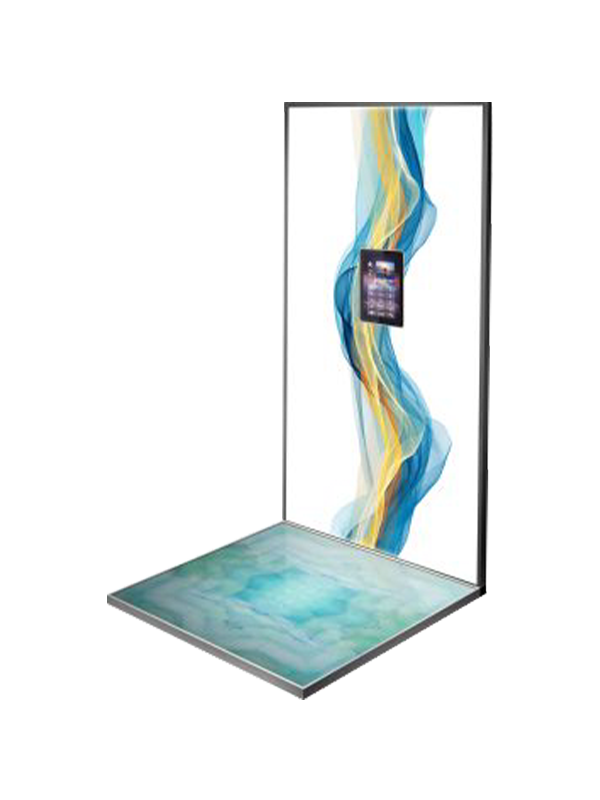
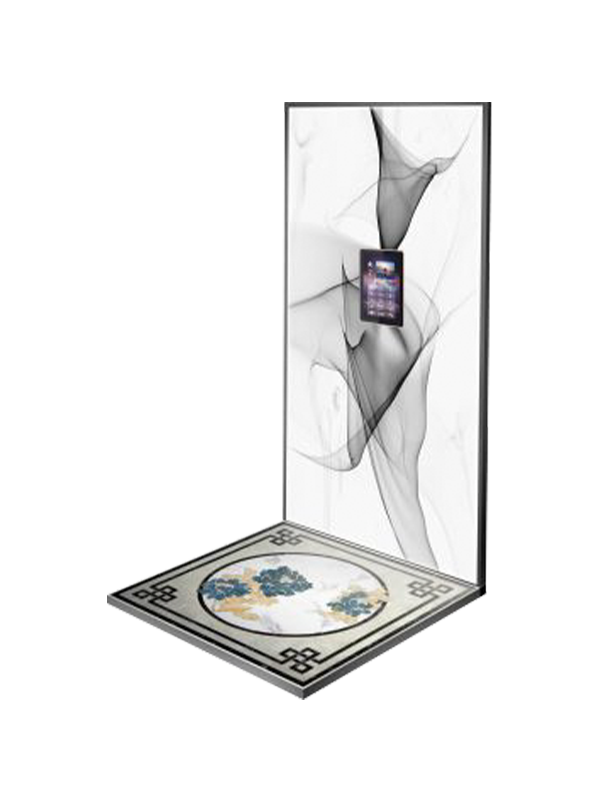
LED integration is the most transformative option: backlit glass or translucent resin panels with edge lighting transform the entire feel of the cabin, creating depth and atmosphere that traditional opaque materials cannot achieve. For villa elevators and high-end residential projects, this combination of material and lighting is increasingly the standard for premium installations.
For a deeper look at how these materials, installation methods, and performance factors interact in real-world elevator projects, including panel thickness specifications and mounting system options, explore our detailed technical resource.
Making the Right Investment
Elevator background boards are a long-term investment in both building performance and occupant experience. The material decision made at installation will affect maintenance schedules, replacement costs, and the overall impression your elevator makes for years — often decades — into the future.
Prioritize lifecycle value over initial cost. A stainless steel or quality HPL panel that performs reliably for 15–20 years delivers far better value than a lower-cost option that requires replacement within five. Match the material to the building's actual traffic patterns, environmental conditions, and design language — and work with suppliers who can provide certified, fire-rated, and structurally engineered assemblies rather than decorative-only solutions.
If you are planning a villa elevator fit-out or looking to upgrade an existing cabin, explore our full range of customized elevator background board options — engineered for durability, designed for style, and built to exceed the demands of premium residential environments.