

 English
 عربى
عربى Deutsch
 Español
 Français
 русский
 日本語
日本語 简体中文
简体中文Content
Most advertising fights for attention. Elevator background boards simply receive it — with nowhere else to look, riders give these surfaces their full, undivided focus. That's not an assumption; it's human psychology at work inside a confined space.
Why Elevators Create a Unique Psychological State
The elevator is one of the last genuinely distraction-free environments in modern life. Conventional elevator etiquette suppresses conversation, discourages eye contact, and creates an almost ritualized social silence. Passengers instinctively fill that silence by scanning their surroundings — and in a well-designed elevator, the background board becomes the dominant visual anchor in the cab.
This is what behavioral researchers call a captive audience effect: when exit is temporarily unavailable and social interaction is discouraged, people become more receptive to ambient stimuli. The background board doesn't interrupt — it simply exists in the precise visual field where attention already lands.
The Numbers Behind the 90% Attention Rate
Industry data consistently shows that elevator environments outperform virtually every other out-of-home format on recall and noticeability. 94% of office workers report noticing elevator content at least once per week, according to an OAAA place-based media study. A Nielsen OOH study found elevator ad recall running 4.2x higher than standard digital display. Captivate Network audits put average brand recall among exposed riders at 70%.
The dwell time per ride — typically 30 to 60 seconds — is the key variable. That's equivalent to a full television commercial, with one critical difference: there's no skip button. Experts in attention research note that impressions need to hold focus for at least 2.5 seconds to form a retrievable memory. A well-executed elevator background board holds attention for 10 to 20 times that threshold on a single ride.
For the average office building occupant making 3 to 5 elevator rides per day, that translates to daily repetition at high attention levels — a combination that is extraordinarily rare in today's fragmented media environment.
The Role of the Background Board Specifically
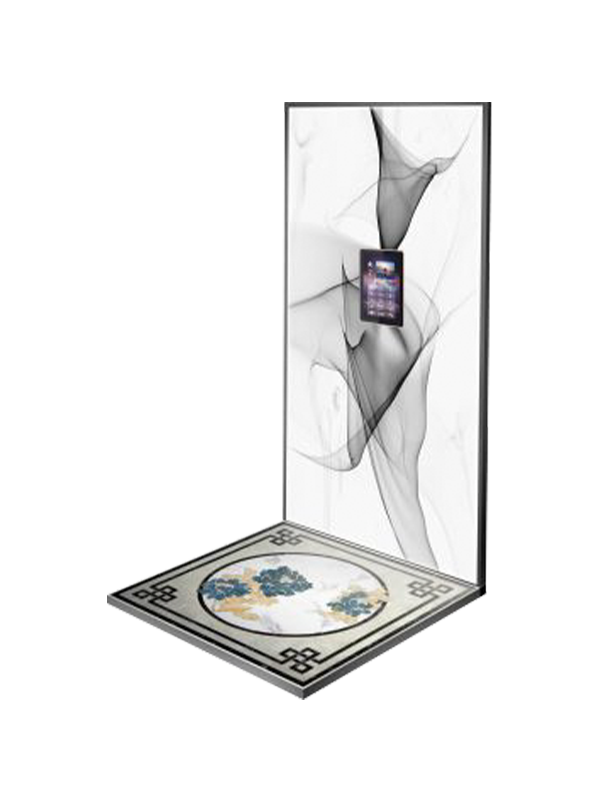
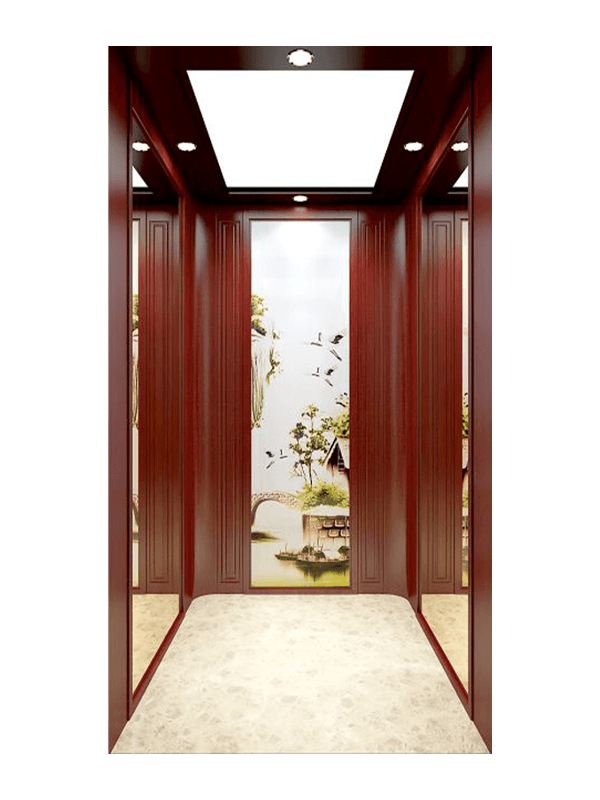
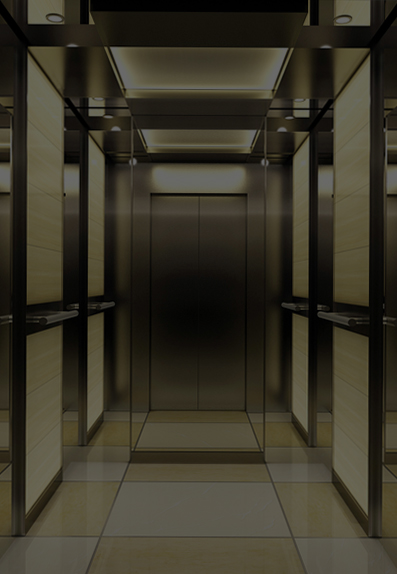
Not all elevator surfaces are equal. The rear wall — where most riders face during a trip — functions as the primary visual terminus. An elevator background board placed in this position doesn't compete with other design elements; it defines the entire visual character of the cab.
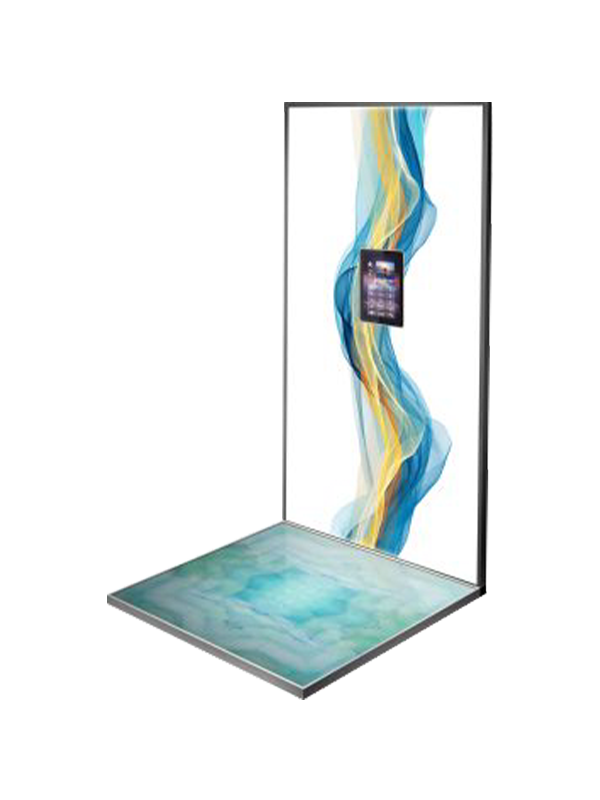
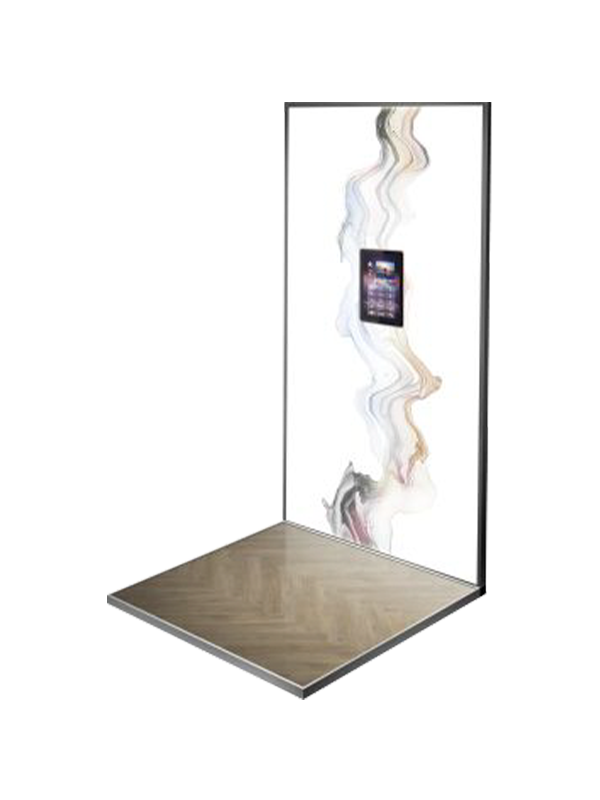
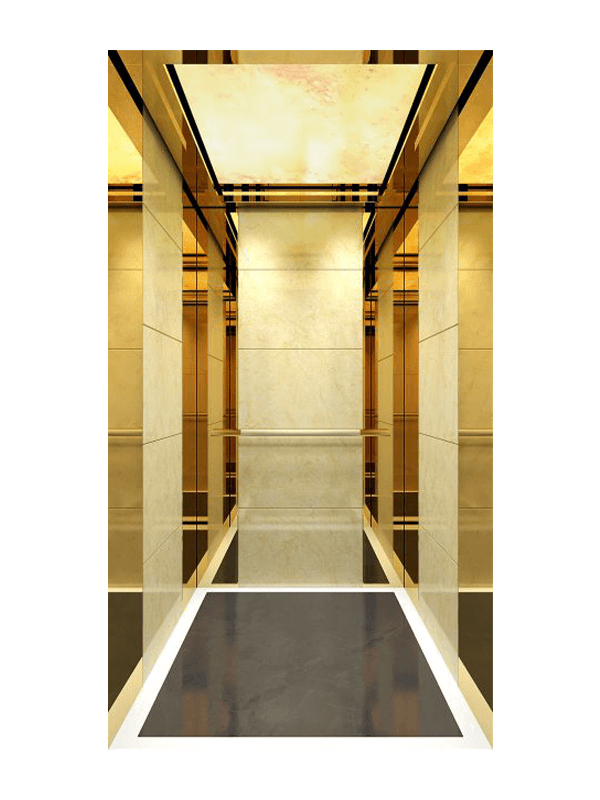
This is why the material, finish, and craftsmanship of the background board carry disproportionate psychological weight. A surface in brushed titanium, stone veneer, or high-gloss panel doesn't just look premium — it signals the quality of the entire building, reinforces brand identity for commercial spaces, and shapes the emotional impression formed during every single ride.
For villa and residential elevators, this effect is even more pronounced. The background board is the element that guests notice first and remember longest, making it the single highest-leverage design decision in the entire elevator car decoration.
Design Principles That Maximize Captive Attention
Understanding the psychology is only useful if the design responds to it. Three principles consistently drive engagement in captive elevator environments:
Clarity over complexity. Riders process the background board in seconds. A single dominant visual element — a rich material texture, an architectural pattern, a bold finish — registers more powerfully than a busy composition. The brain under mild social pressure (the elevator situation) gravitates toward the simplest coherent thing in view.
Tactile suggestion through visual texture. Surfaces that appear touchable — polished stone, warm wood grain, brushed metal — trigger a mild haptic imagination response. Riders don't just see the board; they form a sensory impression of it. This deepens recall and emotional association far beyond what flat graphics achieve.
Environmental harmony. A background board that feels intentionally matched to the cab's overall customized design reads as curated and high-status. Conversely, a mismatched surface breaks the psychological immersion and draws attention to the disconnect rather than the design.
What This Means for Villa Elevator Owners
For private residential elevators, the captive audience is the household itself — family members, guests, visitors — experiencing the space dozens of times each week. Every ride is a micro-impression of the home's taste and investment level.
Choosing a background board isn't a finishing detail. It is the visual identity of the elevator, experienced at high attention, at high frequency, indefinitely. The psychology of captive audiences doesn't just apply to commercial advertising contexts — it applies to every designed interior where people are briefly enclosed and their eyes have nowhere else to go.
That makes the background board the one elevator component where specification decisions have lasting psychological returns.