

 English
 عربى
عربى Deutsch
 Español
 Français
 русский
 日本語
日本語 简体中文
简体中文Content
- 1 What Villa Elevator Car Decoration Actually Covers
- 2 Wall Panel Materials: Strengths and Trade-offs
- 3 Flooring Options and Structural Limits
- 4 Ceiling Design and Lighting Strategy
- 5 Handrails, Fixtures, and Hardware Details
- 6 Matching Cab Decoration to Villa Interior Style
- 7 Key Questions to Resolve Before Finalizing a Decoration Specification
What Villa Elevator Car Decoration Actually Covers
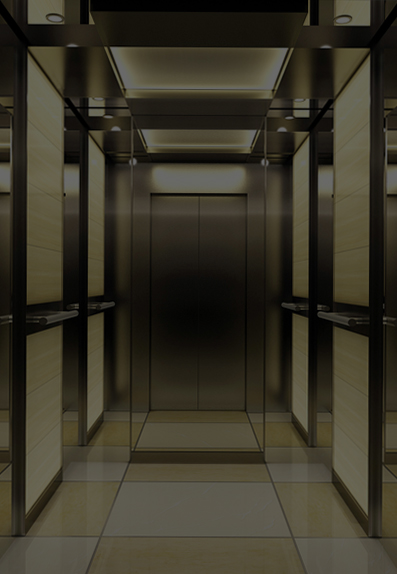
Villa elevator car decoration refers to the interior finishing of a private residential elevator cabin—everything a passenger sees and touches: wall panels, flooring, ceiling, handrails, lighting fixtures, and door surrounds. Unlike commercial elevator interiors designed for high traffic and durability above all else, villa elevator car decoration prioritizes aesthetics, material quality, and harmony with the surrounding residential architecture.
The cabin is a compact, enclosed space, which means every surface carries significant visual weight. A poorly finished cab feels cramped and out of place; a well-designed one reads as a natural extension of the home's interior design language—whether that's a contemporary minimalist villa, a classical European estate, or a mid-century modern residence.
Wall Panel Materials: Strengths and Trade-offs
Wall panel selection is the most consequential decision in villa elevator car decoration. The main options each carry distinct performance and aesthetic profiles:
- Stainless steel — Available in hairline, mirror, brushed, or pattern-etched finishes. Highly durable and easy to clean, but requires careful fingerprint management in mirror finishes. Works well in contemporary and industrial-style villas.
- Natural stone veneer — Marble, travertine, and limestone veneers deliver unmatched luxury. Weight is a structural consideration; veneers (2–3 mm thick) rather than full slabs are standard for cab applications.
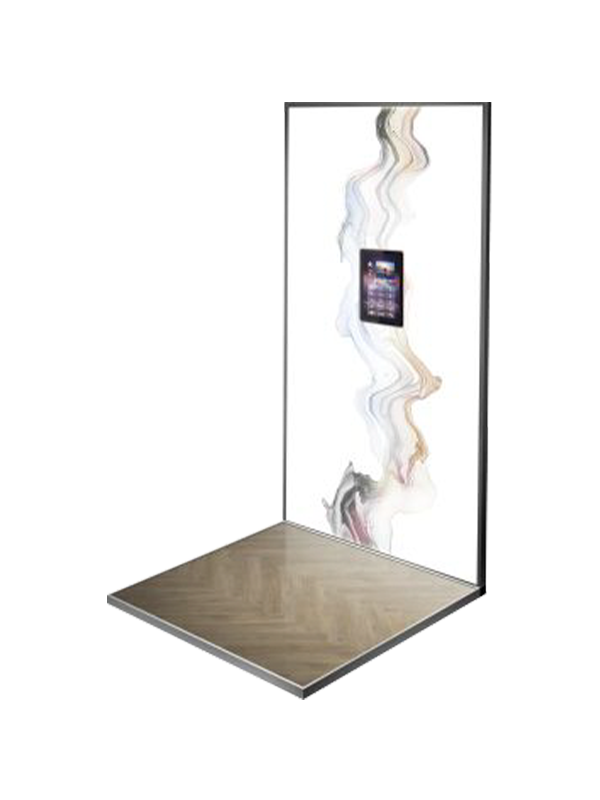
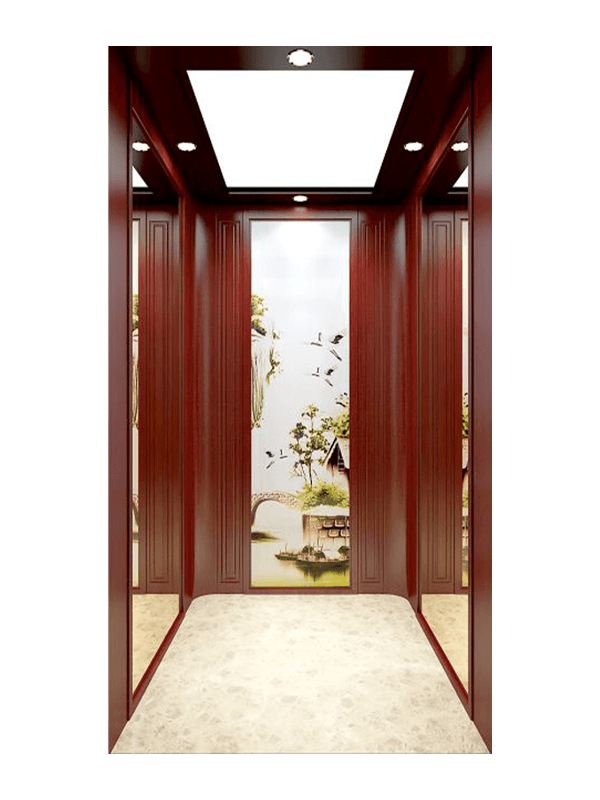
- Wood paneling — Solid wood, engineered wood, and wood veneer all see use. Walnut, oak, and teak are popular choices. Real wood requires humidity management, particularly in climates with significant seasonal variation.
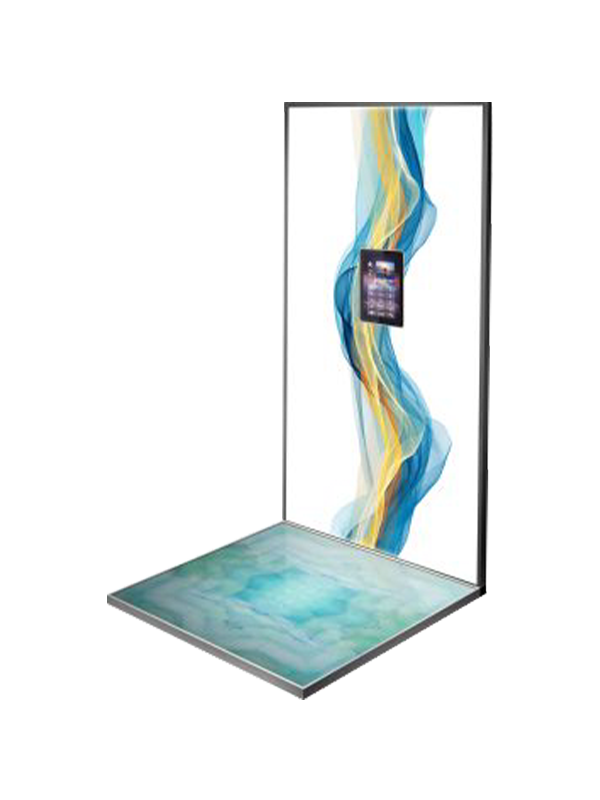
- Glass panels — Tempered or laminated glass, sometimes back-painted or with integrated LED backlighting. Creates depth and a sense of spaciousness in smaller cabs.
- Fabric and leather — Upholstered wall panels remain a niche but effective choice for boutique and classical interiors. Requires periodic maintenance and is not suitable for high-humidity environments.
Many high-end villa elevators combine materials—for example, a stainless steel rear wall paired with wood side panels and a stone-effect floor—to add visual complexity without overwhelming the space.
Flooring Options and Structural Limits
Elevator cab flooring must balance aesthetics with weight constraints. Most residential elevator platforms have a maximum floor finish load of 80–120 kg/m², which rules out full-thickness stone slabs but accommodates most tile, luxury vinyl plank (LVP), engineered wood, and thin-cut stone.
| Flooring Type | Typical Weight (kg/m²) | Slip Resistance | Best Style Match |
|---|---|---|---|
| Porcelain tile (10 mm) | 22–25 | High (matte finish) | Contemporary, minimalist |
| Engineered wood (12 mm) | 10–14 | Medium | Warm, transitional |
| Thin stone veneer (3 mm) | 8–12 | Medium (honed finish) | Luxury, classical |
| Luxury vinyl plank | 4–6 | High | Versatile, budget-conscious |
Always confirm the platform load rating with the elevator manufacturer before specifying flooring. Installing overweight finishes voids most warranties and can affect leveling accuracy.
Ceiling Design and Lighting Strategy
Cab ceilings in villa elevators typically fall into three categories: flush panel ceilings, coffered or layered ceilings, and full-glass or mirror ceilings. The ceiling height of most residential elevator cabs ranges from 2,100 mm to 2,400 mm—enough to accommodate recessed lighting without feeling oppressive.
Lighting has an outsized effect on perceived quality. Key considerations include:
- Color temperature: 2,700–3,000 K (warm white) suits most residential interiors and flatters skin tones. Cool white (4,000 K+) can make a cab feel clinical.
- Diffusion: Direct downlights create harsh shadows; frosted panels, indirect cove lighting, or backlit ceiling elements deliver a softer, more residential quality of light.
- Dimmability: Dimmable LED drivers allow the cab's mood to shift—brighter for daily function, lower for evening use. A small but impactful detail in a luxury villa context.
- Emergency lighting compliance: Regardless of decorative choices, all elevator cabs must meet local code requirements for emergency lighting duration (typically a minimum of one hour).
Handrails, Fixtures, and Hardware Details
Hardware finish consistency matters enormously in a small space. Mixing brushed gold handrails with chrome button panels and a satin nickel threshold creates visual noise. Establishing a single metal finish family—and sticking to it across handrails, control panel frames, threshold plates, and door edges—is one of the simplest ways to elevate the perceived quality of a villa elevator car decoration.
Popular metal finishes for contemporary villa elevators include:
- Brushed stainless steel — timeless, low-maintenance, works across most styles
- Matte black — strong contrast element, suits modern and industrial aesthetics
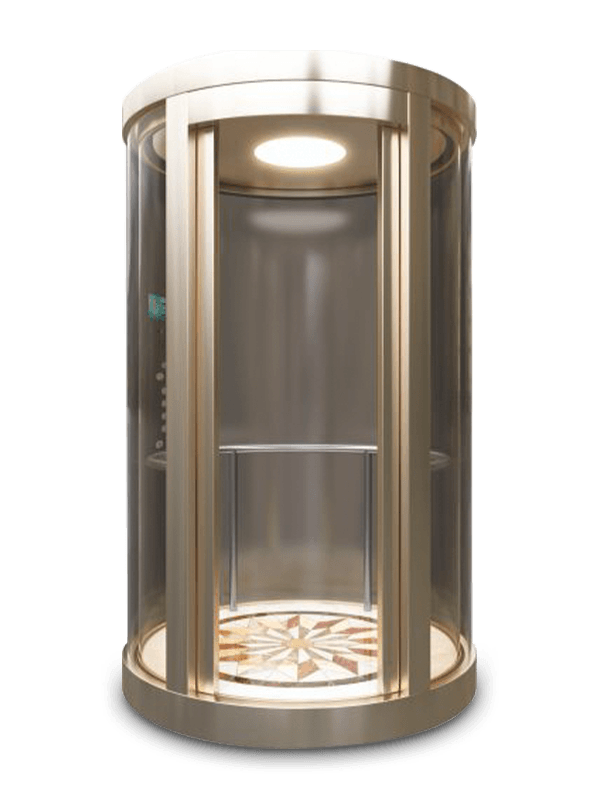
- Brushed brass / PVD gold — warm, high-end feel, popular in transitional and Art Deco interiors
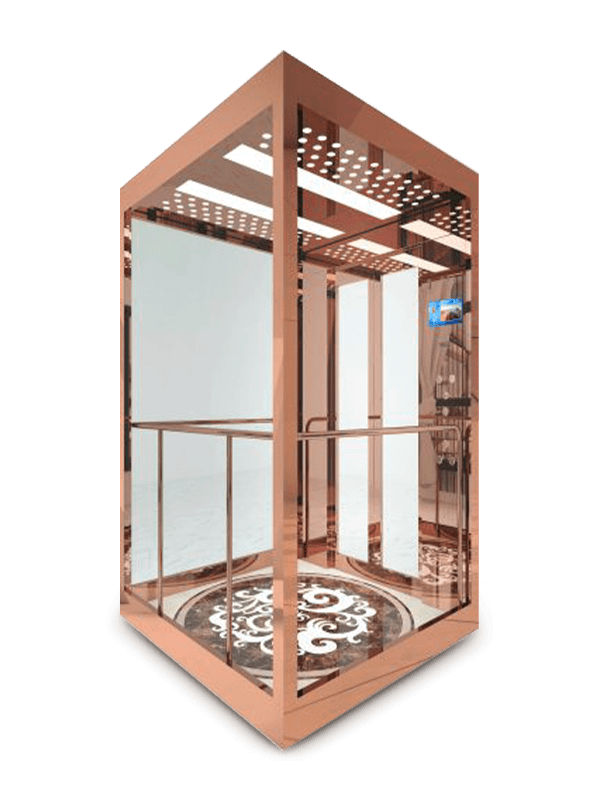
- Rose gold — softer alternative to yellow gold, trending in contemporary luxury projects
Handrail placement should follow local accessibility guidelines even in private residences—both for safety and for future-proofing the property for aging-in-place use.
Matching Cab Decoration to Villa Interior Style
The elevator cab should read as intentional, not incidental. A useful design rule: select materials and finishes that appear elsewhere in the villa's ground floor or lobby—flooring that echoes the entrance hall stone, wall paneling that references the study's wood millwork, or ceiling details that mirror the living room's coffered treatment.
Below are typical style directions and their corresponding cab decoration approaches:
- Contemporary minimalist: Monochromatic palette, flush surfaces, hairline stainless steel, backlit ceiling panel, minimal hardware visibility.
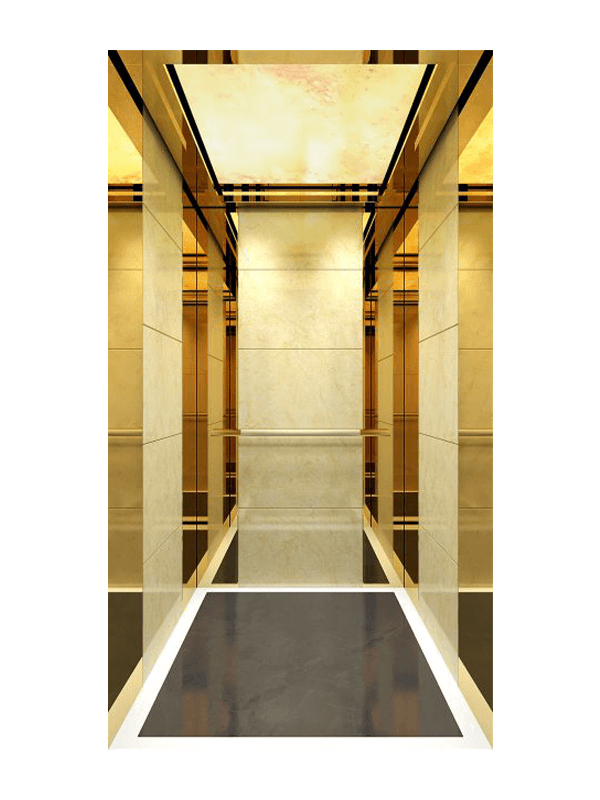
- Classical / neoclassical: Cream or beige marble veneer walls, brass fixtures, coffered ceiling with chandelier-style LED pendant, upholstered handrail in neutral fabric.
- Mid-century modern: Walnut wood panels, matte black hardware, geometric ceiling grid, warm amber lighting.
- Industrial / loft: Exposed steel structure where possible, concrete-effect panels, matte black fixtures, Edison-style filament LED ceiling lights.
- Japandi (Japanese-Scandinavian): Natural oak veneer, washi paper-inspired wall panels, recessed warm lighting, minimal hardware, no decorative ornamentation.
Key Questions to Resolve Before Finalizing a Decoration Specification
Before committing to a villa elevator car decoration package, confirm the following with both the elevator supplier and the interior design team:
- What is the maximum floor finish load capacity of the platform?
- Are the wall panel attachment points compatible with the chosen material weight and thickness?
- Does the ceiling design allow for required ventilation and emergency lighting placement?
- Which finishes are covered under the elevator manufacturer's warranty, and which are owner-supplied?
- What is the lead time for custom panels—particularly stone veneer and bespoke metalwork—relative to the overall construction schedule?
Resolving these points early prevents costly retrofits and ensures the finished cab reflects the design intent without compromise.