

 English
 عربى
عربى Deutsch
 Español
 Français
 русский
 日本語
日本語 简体中文
简体中文Content
- 1 What Elevator Car Decoration Actually Covers
- 2 The Most Common Decoration Styles and Where They Work Best
- 3 Design Principles That Distinguish a Professional Result
- 4 The Role of the Background Board in Cabin Design
- 5 Customization: What It Means in Practice
- 6 Common Mistakes to Avoid When Specifying Elevator Car Decoration
- 7 Working With a Manufacturer vs. a Local Installer
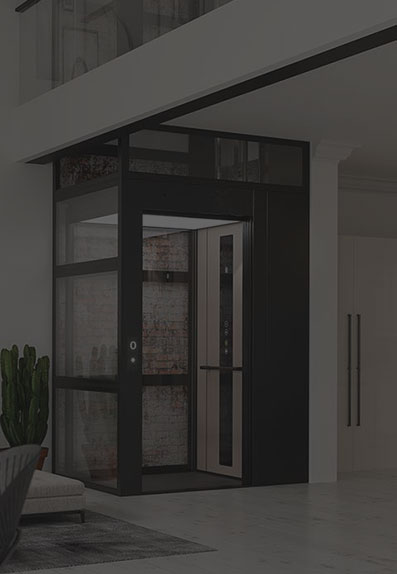
The elevator car is more than a functional box that moves between floors — in a high-end villa or private residence, it is an extension of your interior design. Homeowners and architects increasingly treat the elevator cabin as a showcase space, one where material quality, lighting, and finish communicate the same level of refinement as the surrounding rooms. Yet many buyers come to us without a clear picture of what elevator car decoration actually involves, what choices they face, or what separates a lasting result from a disappointing one. This guide is meant to answer those questions directly.
What Elevator Car Decoration Actually Covers
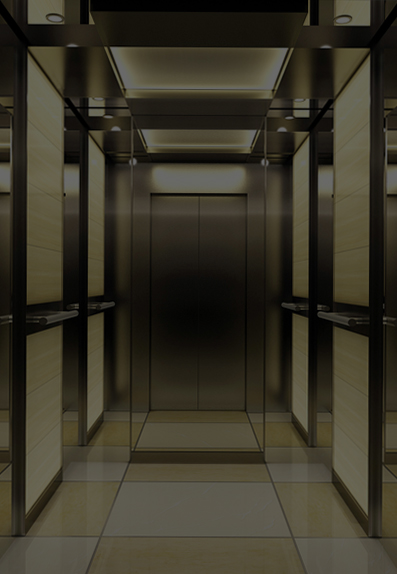
Elevator car decoration refers to all the visible interior surfaces and components of the lift cabin — walls, ceiling, floor, handrails, lighting fixtures, door panels, and the control panel surround. Each of these elements contributes to the overall visual effect, and neglecting even one of them can undermine an otherwise well-designed space.
In practice, the scope of a decoration project depends on whether you are fitting out a new installation or upgrading an existing cabin. New builds offer the most freedom — you can specify everything from scratch. Retrofits require working around existing structural dimensions and mechanical components, but they still allow substantial visual transformation through wall panels, flooring, and lighting changes.
Key Components of a Decorated Elevator Cabin
- Wall panels: The dominant visual surface, typically clad in stainless steel, wood veneer, tempered glass, or composite panels
- Ceiling: Can be flat, coffered, or fitted with an illuminated panel; lighting choice here has the biggest impact on ambiance
- Flooring: Stone tile, wood, or heavy-duty composite; must tolerate edge-loading from foot traffic and trolleys
- Handrail: Functional safety element that can be made decorative through material and profile choice
- Door panels and door frames: The first surface passengers see on each landing; often underestimated in design planning
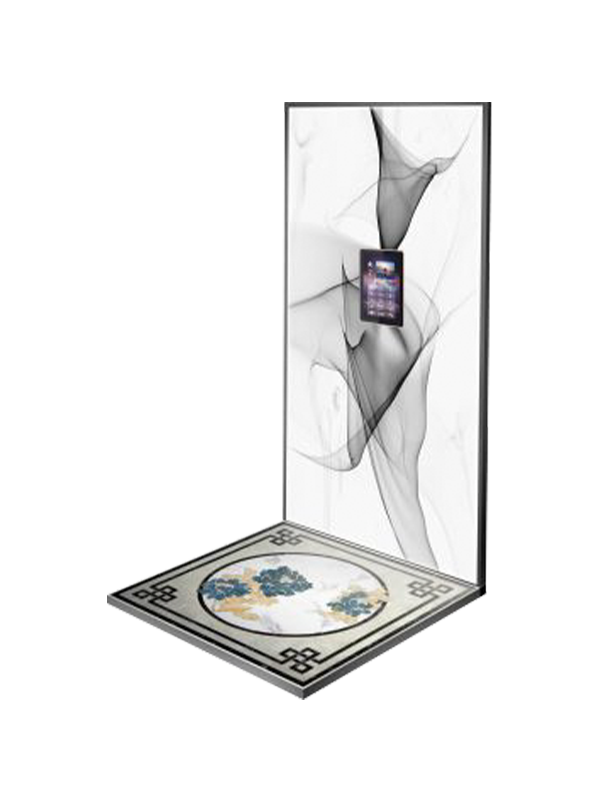
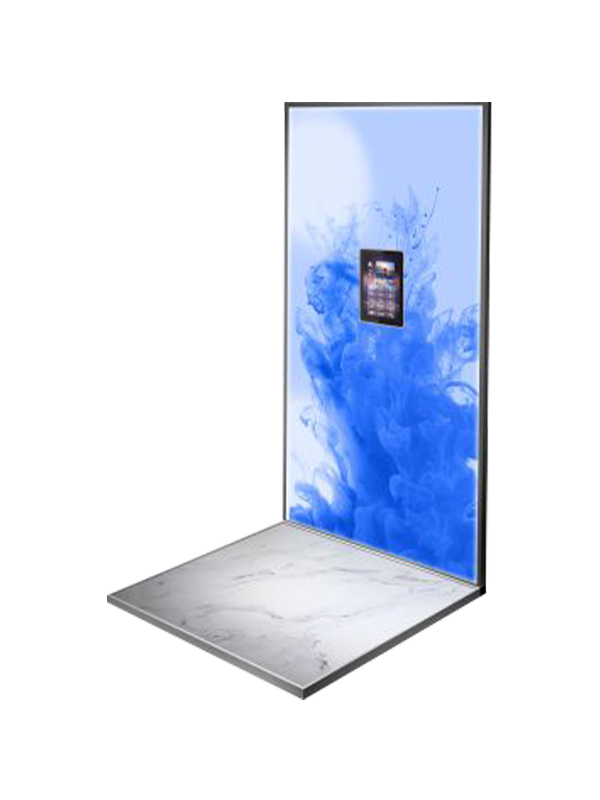
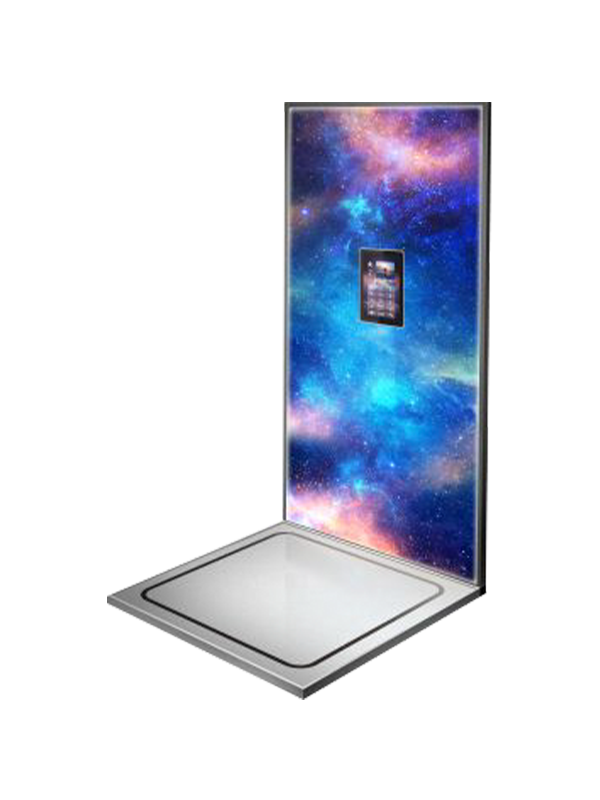
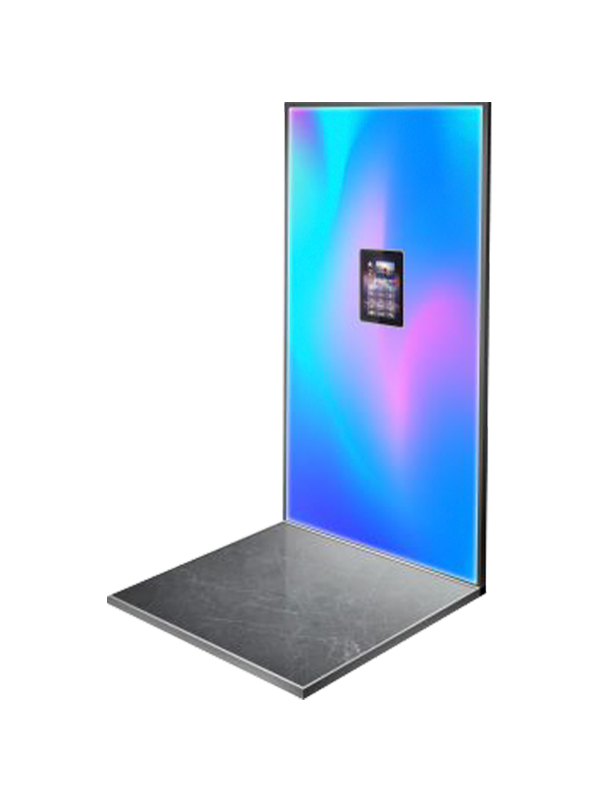
- Background board: A dedicated decorative rear wall panel that anchors the cabin's visual identity
The Most Common Decoration Styles and Where They Work Best
Choosing a decoration style is not simply an aesthetic preference — it is a decision that interacts with maintenance requirements, budget, and the surrounding architecture. Below are the styles we most frequently supply, with honest observations about where each performs well.
Stainless Steel Finish
Brushed or etched stainless steel remains the most specified material globally for elevator interiors, particularly in commercial and semi-commercial settings. It is easy to clean, dimensionally stable, and resists the humidity and temperature variation that enclosed shaft environments create. Mirror-finish steel shows fingerprints readily, which is why most residential clients lean toward hairline or satin brush textures. Etched patterns — geometric reliefs pressed into the steel surface — add visual depth without sacrificing cleanability.
Wood and Wood-Grain Surfaces
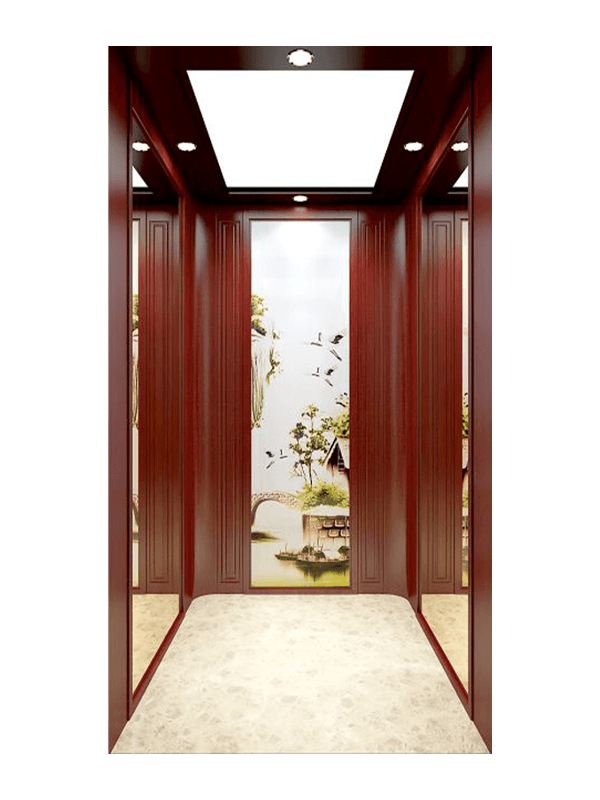
Warm wood tones are consistently popular in villa and private home installations. Real wood veneer over a moisture-resistant substrate gives an authentic grain character, while high-quality PVC wood-grain films offer similar visual results at a lower cost and with better humidity resistance. In regions where indoor relative humidity regularly exceeds 70%, we advise clients to opt for engineered wood-grain panels rather than solid veneers. Properly sealed engineered panels maintain their dimensional stability across 10 to 15 years of typical residential use.
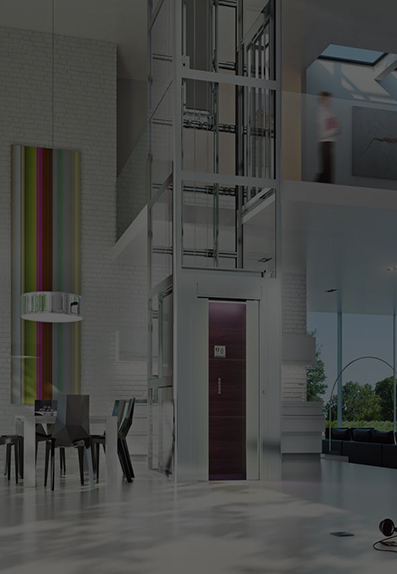
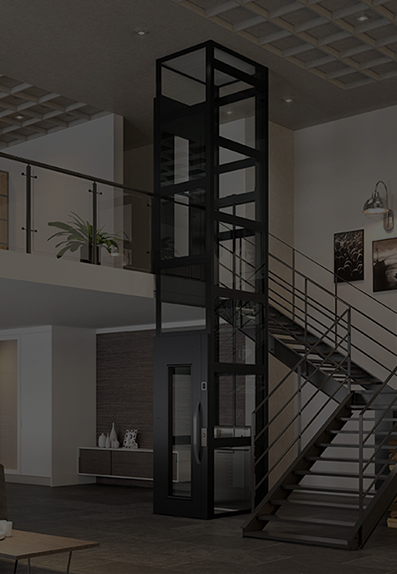
Panoramic Glass and Sightseeing Cabins
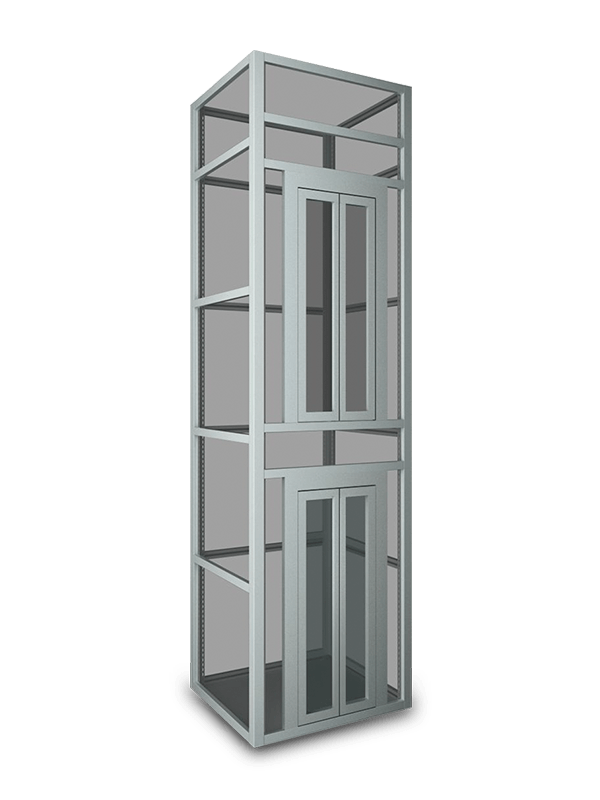
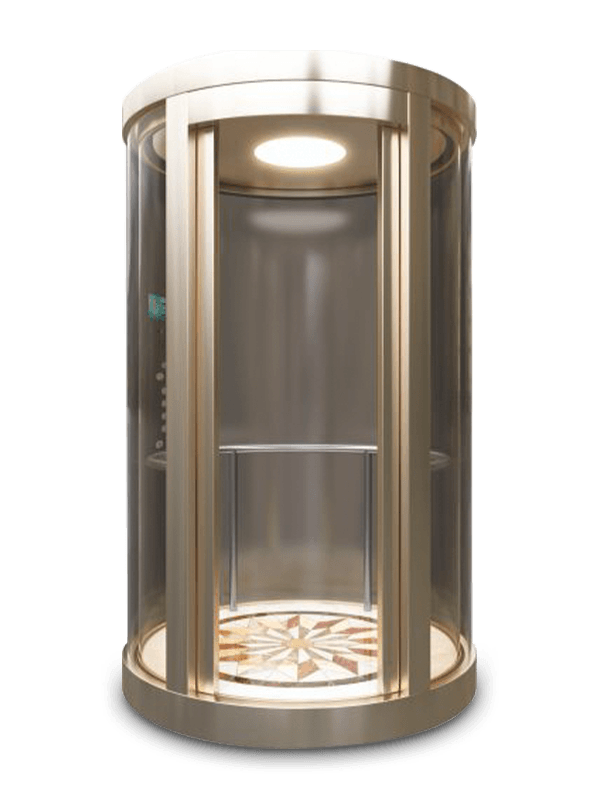
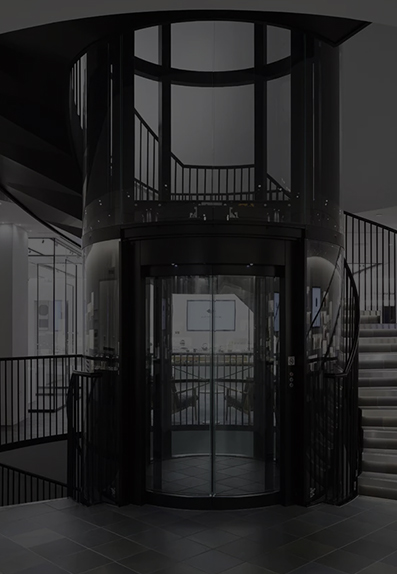
Tempered glass side panels or full panoramic glass cabins are chosen when the hoistway itself is a design feature — for example, a glazed shaft alongside a staircase in an open-plan villa. The visual effect is dramatic, but it introduces structural and safety constraints: all glass used in elevator interiors must meet laminated safety glass standards, and the supporting frame must be engineered to handle dynamic loads. Panoramic cabins are typically heavier than standard configurations, which can affect motor sizing and energy consumption.
Marble and Imitation Marble
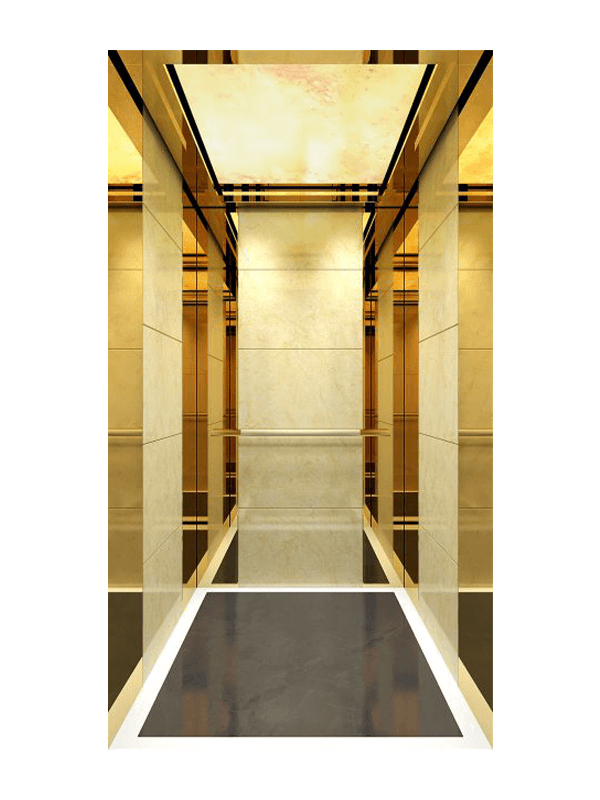
Natural marble creates a genuinely luxurious impression but comes with significant weight penalties — a full stone-clad cabin can add 150 to 250 kg over a standard stainless steel fit-out, requiring careful load assessment. High-quality imitation marble panels made from sintered stone or ceramic composite achieve a visually indistinguishable result at roughly 40 to 60% less weight, making them the practical choice in most residential installations where rated load capacity is limited to 300–400 kg.
Rose Gold and Luxury Metal Finishes
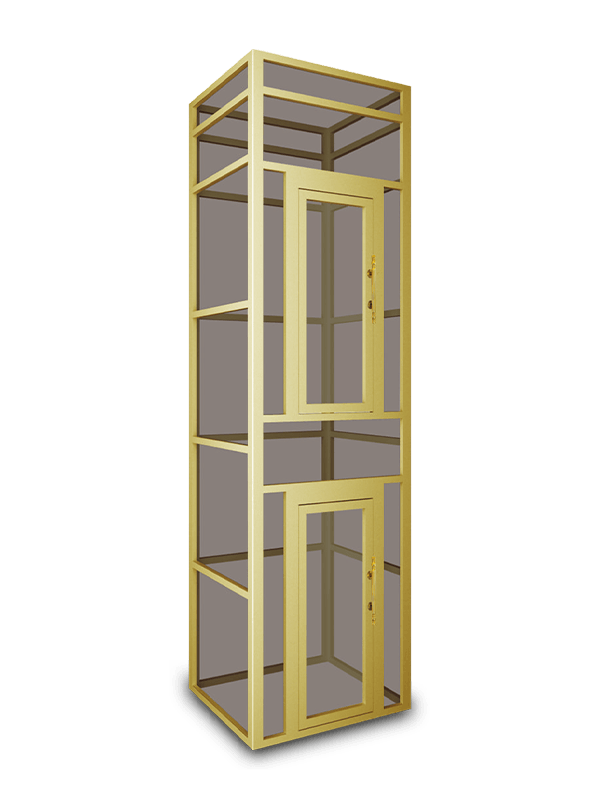
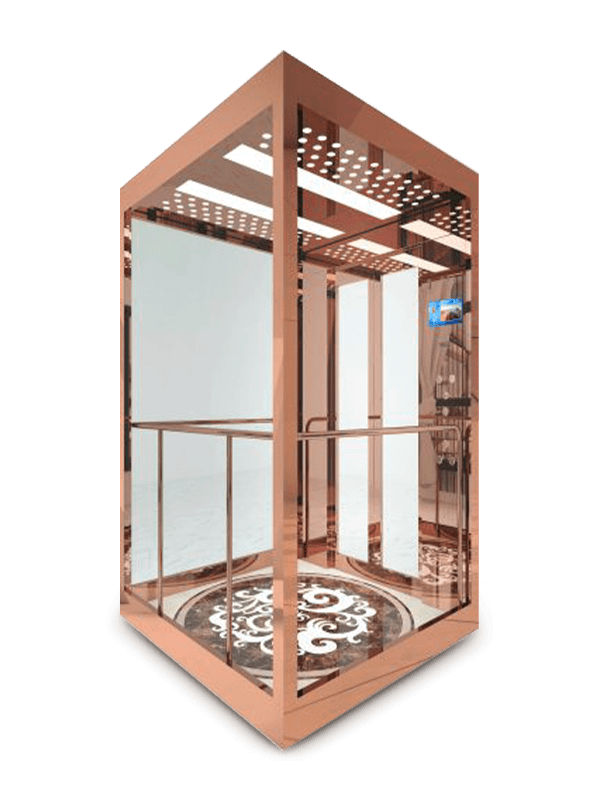
Rose gold PVD-coated stainless steel has become a recognizable signature of high-end elevator interiors over the past decade. The PVD (Physical Vapour Deposition) process bonds a titanium-based colour layer to the steel substrate, producing a finish that resists scratching and tarnishing far better than plated alternatives. When combined with a patterned or fluted panel design, the result is a cabin that communicates luxury unambiguously without requiring expensive natural materials.
| Material | Humidity Resistance | Weight Impact | Maintenance Level | Typical Cost Range |
|---|---|---|---|---|
| Brushed Stainless Steel | Excellent | Low | Low | Moderate |
| Wood Veneer | Moderate | Low | Moderate | Moderate–High |
| Engineered Wood-Grain Panel | Good | Low | Low | Moderate |
| Tempered / Laminated Glass | Excellent | Moderate | Moderate | High |
| Imitation Marble (Sintered Stone) | Excellent | Moderate | Low | Moderate–High |
| Rose Gold PVD Steel | Excellent | Low | Low | High |
Design Principles That Distinguish a Professional Result
A well-decorated elevator car does not happen by selecting expensive materials at random. There are consistent principles that distinguish professional outcomes from those that simply look costly.
Proportion and Scale
Most residential elevator cars have a floor area of 0.8 m² to 1.6 m² and a ceiling height of 2.1 m to 2.4 m. These are compact proportions, and decoration choices that work well in a large lobby can feel oppressive here. Lighter colours, vertical panel lines, and indirect ceiling lighting all create a sense of greater height and openness without changing the physical dimensions. Highly patterned or dark materials are more effective when used selectively — for example, as an accent on the rear wall only — rather than applied to all surfaces equally.
Material Continuity With the Surrounding Interior
The elevator landing doors and frames are visible from the corridor or lobby on every floor. When these elements are treated as isolated components rather than part of the overall interior scheme, the result feels incongruous. The most successful installations we have delivered share a deliberate connection — in colour palette, material texture, or hardware finish — between the cabin interior, the door surrounds, and the adjacent walls. This does not mean everything must match; contrast can be intentional and effective, but it should be designed, not accidental.
Lighting as a Design Tool
Elevator car lighting is frequently treated as an afterthought, specified to minimum lux levels without attention to colour temperature or diffusion quality. In practice, a cabin lit with warm 2700–3000K LEDs behind a frosted panel reads as significantly more premium than the same materials lit with a cool 6000K ceiling spot. Recessed perimeter lighting or cove lighting at the ceiling–wall junction is particularly effective in villa applications, creating a soft glow that flatters both the cabin finishes and the occupants.
Hardware and Fixture Consistency
Small components — the handrail bracket, the threshold plate, the button panel bezel — carry disproportionate visual weight because they are at eye level and touch-height. Mixing hardware finishes, such as chrome brackets with a brushed gold handrail, is one of the most common errors in cabin fit-outs. Specifying all metal hardware in a single coordinated finish, even if it means a custom order, consistently elevates the perceived quality of the result.
The Role of the Background Board in Cabin Design
The rear wall — commonly called the background board — is the focal point of the elevator car interior. It is the surface that faces passengers as they enter and the one they look at throughout the ride. Consequently, it is the appropriate location for the most deliberate design investment.
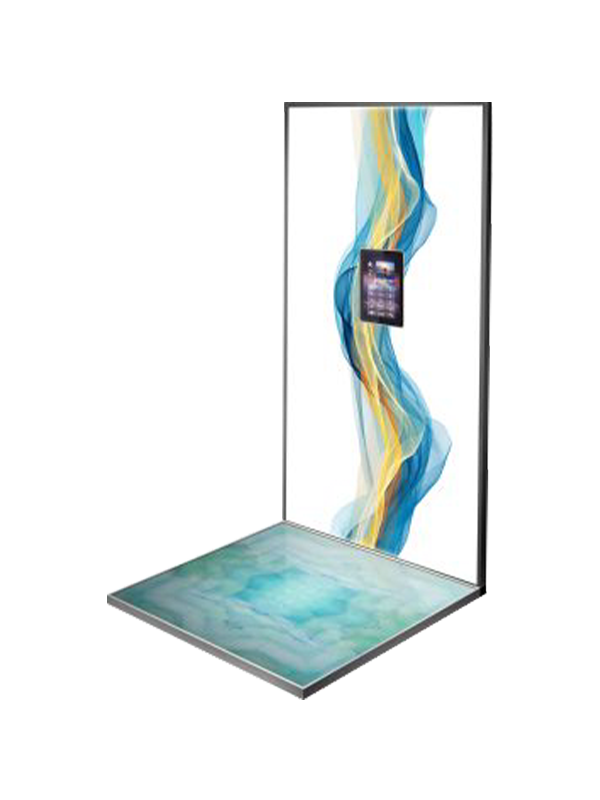
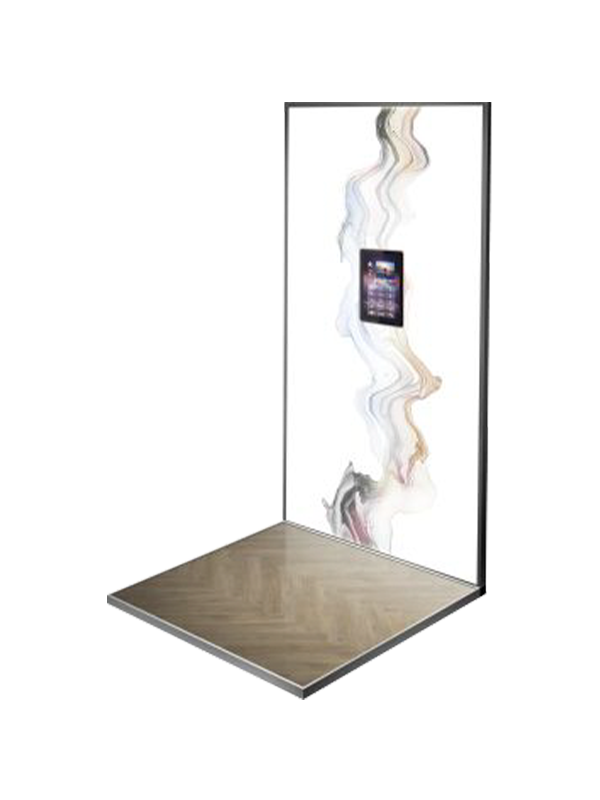
Background boards can be executed in virtually any material: etched steel with a custom pattern, backlit glass, a framed mirror panel, a stone-effect sintered surface, or a combination of materials with contrasting textures. The choice communicates tone immediately — a mirrored panel reads as classical and formal; a natural stone surface reads as grounded and contemporary; an illuminated glass panel reads as modern and technological.
From a manufacturing standpoint, the background board must also be engineered to remain stable in the enclosed, often humid environment of a hoistway shaft. Anti-moisture coating of substrates, sealed edge treatment, and appropriate fastening systems are not cosmetic details — they directly determine how long the decoration holds its original appearance.
Customization: What It Means in Practice
The term "customization" is used loosely in our industry, so it is worth being specific. True customization at the manufacturing level means that panel dimensions, surface treatment, colour, texture, hardware finish, and accessory configuration are all specified and produced to your project's requirements — not selected from a limited catalogue of pre-made combinations.
This matters because standard catalogue cabins are dimensioned for typical shaft sizes. Villa projects frequently involve non-standard hoistway dimensions, unusual ceiling heights, or design requirements that simply cannot be met by off-the-shelf products. A custom-produced cabin also allows accessory integration — handrails, ventilation grilles, mirror panels, and display screens — to be designed as part of the original fit-out rather than added retrospectively.
We offer a full range of customizable elevator car decoration series designed specifically for villa and private residential applications, covering everything from the cabin walls and ceiling to optional accessories and background boards.
Common Mistakes to Avoid When Specifying Elevator Car Decoration
Having produced and supplied elevator cabin decoration for projects across multiple countries, we have seen the same specification errors repeat across different markets. The following list is not exhaustive, but it covers the issues most likely to result in cost overruns or disappointing outcomes.
- Specifying decoration before finalizing shaft dimensions. Cabin decoration is dimensionally fixed once manufactured. Changes to the shaft structure after panels are produced almost always require remakes at full cost.
- Underestimating weight impact. Every decoration layer adds to the cabin's dead weight, which is subtracted from the rated passenger load. A marble floor and stone-effect walls can reduce usable capacity by 80–120 kg in a standard residential cabin.
- Ignoring maintenance access requirements. Inspection panels, emergency lighting units, and ventilation openings must remain accessible after decoration is installed. Designs that cover these points create compliance and maintenance problems.
- Selecting materials based on showroom appearance alone. Showroom lighting and conditions differ from an enclosed hoistway environment. Always request material samples and ask specifically about performance in humidity and temperature variation.
- Treating door panels and landing surrounds as separate decisions. The visual connection between the cabin interior and the landing-side door treatment is one of the first things visitors notice. Specifying them together, from the same supplier, is strongly advisable.
Working With a Manufacturer vs. a Local Installer
For straightforward replacements using stock components, a local installer can be the faster route. But for villa projects where the decoration needs to integrate with a specific design scheme, working directly with a manufacturer offers clear advantages: access to the full production capability, the ability to specify non-standard dimensions and finishes, and direct accountability for quality at every production stage.
When evaluating a manufacturing supplier, look for evidence of quality management — ISO 9001 certification is a meaningful baseline — and ask to see examples of completed projects with similar design intent to yours. Factories that have served a variety of project types, from regional villa developments to individual custom commissions, generally have the process flexibility to handle non-standard requirements without disruption.
Lead time is another important factor. Custom cabin components typically require 4 to 8 weeks from approved specification to shipping, depending on the complexity of the surface treatments and the volume of concurrent orders at the factory. Building this into the project programme early prevents the elevator becoming the critical-path item that delays an entire handover.