


 English
 عربى
عربى Deutsch
 Español
 Français
 русский
 日本語
日本語 简体中文
简体中文Content
- 1 What Is a Household Elevator and Is It Worth Installing
- 2 Types of Household Elevators
- 3 How Much Does a Household Elevator Cost
- 4 Space Requirements for Home Elevator Installation
- 5 Safety Standards and Code Compliance
- 6 Accessibility and Aging-in-Place Benefits
- 7 Impact on Home Resale Value
- 8 Maintenance and Operating Costs
- 9 How to Choose the Right Household Elevator
- 10 Household Elevator vs Stairlift vs Platform Lift
- 11 Final Takeaway
What Is a Household Elevator and Is It Worth Installing
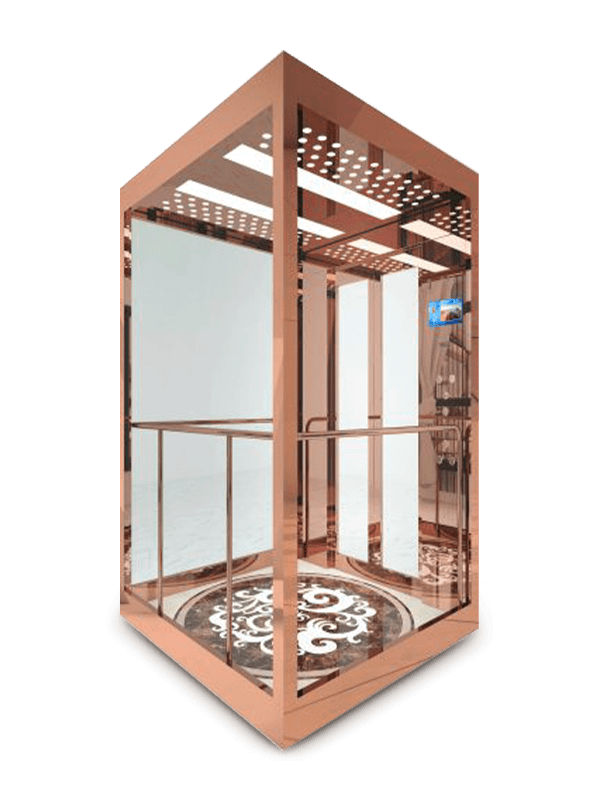
A household elevator is a compact, mechanically driven lift installed inside a private home to transport people and goods between floors. For homeowners with mobility challenges, multi-story layouts, or long-term aging-in-place goals, installing a household elevator is one of the most functional and value-adding upgrades available. Beyond accessibility, it adds convenience, increases resale value by an estimated 10 percent on average, and eliminates the daily strain of stair climbing for elderly residents or people with disabilities.
This guide covers everything you need to make an informed decision, from elevator types and costs to installation requirements, safety standards, and maintenance expectations.
Types of Household Elevators
There are four main types of household elevators, each suited to different homes, budgets, and structural situations.
Hydraulic Elevators
Hydraulic elevators use a fluid-driven piston to raise and lower the cab. They are among the smoothest-riding residential options and can support heavier loads, typically up to 1,000 pounds. However, they require a separate machine room and involve a fluid reservoir, which can raise environmental concerns if not properly maintained. Installation costs typically range from $20,000 to $35,000.
Cable-Driven Traction Elevators
These work similarly to commercial elevators, using a counterweight and steel cables driven by a motor. They offer a quiet, efficient ride and suit homes with three or more stories. The mechanical system is housed above the shaft, requiring ceiling or attic space. Total installed cost typically falls between $20,000 and $40,000.
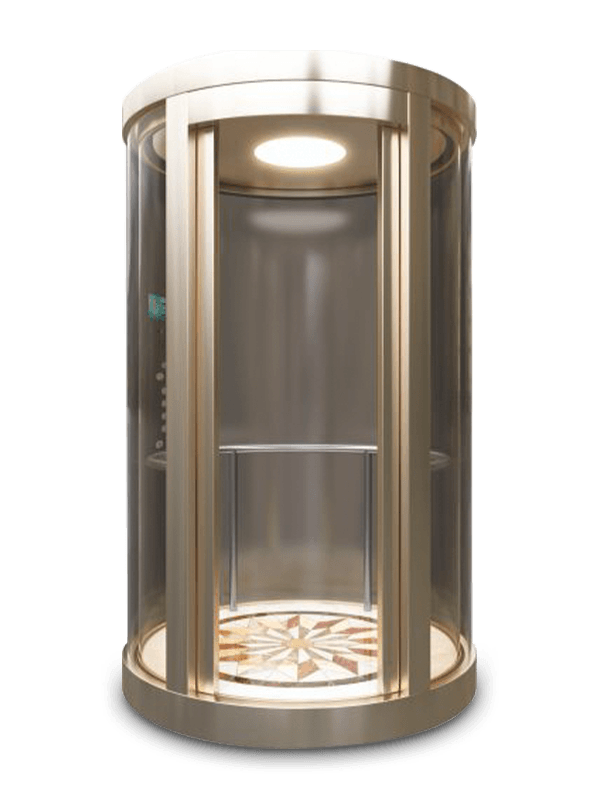
Pneumatic Vacuum Elevators
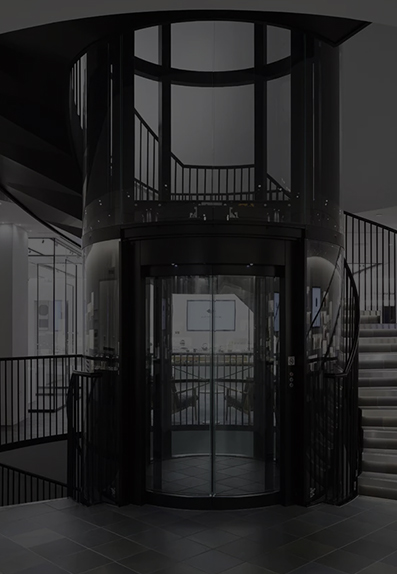
Pneumatic elevators use air pressure differences above and below the cab to move it up or down. They are self-supporting, require no shaft construction or machine room, and can be installed in as little as one to two days. The cylindrical design is visually distinctive and fits spaces where traditional installation is impractical. Cost ranges from $15,000 to $30,000, making them a competitive mid-range option.
Chain-Driven Winding Drum Elevators
These are among the most affordable residential elevator systems, using a motor-driven drum to wind a steel chain. They are compact and suitable for two-story homes but tend to be louder than other options. Entry-level models start around $10,000 to $18,000 installed.
| Type | Typical Installed Cost | Machine Room Required | Best For |
|---|---|---|---|
| Hydraulic | $20,000 - $35,000 | Yes | Heavy loads, smooth ride |
| Cable-Driven Traction | $20,000 - $40,000 | Yes (overhead) | Multi-story homes |
| Pneumatic Vacuum | $15,000 - $30,000 | No | Space-limited homes |
| Chain-Driven Drum | $10,000 - $18,000 | No | Budget-conscious two-story homes |
How Much Does a Household Elevator Cost
The total cost of a household elevator depends on type, cab size, number of stops, customization level, and local labor rates. Here is a realistic breakdown of what to budget for:
- Equipment cost: $8,000 to $25,000 depending on the drive system and cab finish
- Hoistway or shaft construction: $5,000 to $15,000 if new construction is needed
- Electrical work: $500 to $2,000 for a dedicated 208V or 230V circuit
- Permits and inspections: $300 to $1,500 depending on jurisdiction
- Annual maintenance contract: $300 to $700 per year after installation
Retrofitting an existing home is generally more expensive than including an elevator in new construction. Pneumatic models save significantly on shaft costs because they are self-contained and freestanding, which is why they have become increasingly popular for retrofit projects.
Space Requirements for Home Elevator Installation
One of the first concerns homeowners raise is whether their home has enough space. Here is what each type typically needs:
Hoistway Dimensions
A standard residential hoistway for a hydraulic or traction elevator measures approximately 36 inches by 48 inches in interior footprint, though larger cab options require 48 by 48 inches or more. The shaft must align vertically through each floor, meaning careful planning is needed to avoid structural beams, plumbing, or HVAC ducts.
Pit Depth and Overhead Clearance
Most conventional home elevators require a pit depth of 6 to 12 inches below the lowest landing and an overhead clearance of at least 84 to 102 inches above the highest landing. Pneumatic elevators eliminate the pit requirement entirely, which is a major advantage in slab-on-grade homes.
Closet Conversions
Many homeowners convert a stacked pair of closets into a hoistway. A closet measuring 36 by 36 inches per floor is generally the minimum workable footprint for a single-person residential cab. This approach avoids major structural work and keeps costs down.
Safety Standards and Code Compliance
Household elevators in the United States are governed by ASME A17.1/CSA B44, the Safety Code for Elevators and Escalators, specifically the provisions addressing private residence elevators. Key safety features required or strongly recommended include:
- Door interlocks that prevent movement unless all doors are fully closed
- Emergency stop buttons accessible from inside the cab
- Automatic lowering to the nearest floor in case of power failure
- Telephone or communication device inside the cab
- Gate or door sensors to detect obstructions
- Load limit safeguards that prevent operation when overloaded
Local jurisdictions often require a permit and inspection before the elevator can be legally used. Some states mandate annual inspections by a licensed elevator inspector. Skipping permits not only creates legal liability but can void manufacturer warranties and complicate home insurance coverage.
Accessibility and Aging-in-Place Benefits
Approximately 90 percent of adults aged 65 and older want to remain in their current homes as they age, according to AARP surveys. A household elevator directly addresses the most common barrier to doing so: stair navigation. Falls on stairs account for a disproportionate share of serious injuries among older adults, with the CDC reporting that falls are the leading cause of fatal and nonfatal injuries in this population.
Beyond elderly residents, household elevators also serve people recovering from surgery, those with chronic joint conditions, wheelchair users, and families transporting heavy items such as laundry, groceries, or furniture between floors. A cab measuring 36 by 48 inches is typically sufficient to accommodate a standard wheelchair.
Compared to a stairlift, a household elevator accommodates wheelchair users directly and serves all household members equally. Stairlifts typically cost $3,000 to $10,000 installed, making them cheaper upfront, but they do not serve wheelchair users and may be inadequate for multi-story homes.
Impact on Home Resale Value
The effect on resale value depends heavily on the market segment, buyer demographics, and how well the elevator is integrated into the home design. In general:
- Elevators in homes above $600,000 tend to be viewed as a premium feature and can command a higher asking price
- In retirement-friendly markets or communities with older buyer demographics, elevators can significantly reduce time on market
- In starter-home or budget markets, an elevator may not recover its installation cost through resale alone
- A well-maintained, code-compliant elevator with transferable service records is more attractive to buyers than one with deferred maintenance or missing permits
For most owners, the return on investment is best understood as a combination of daily utility, personal quality of life, and the avoided cost of relocating to a single-story home or assisted living facility later in life.
Maintenance and Operating Costs
A household elevator is a mechanical system and requires regular maintenance to operate safely and reliably. Most manufacturers recommend a twice-yearly service visit, during which a technician inspects cables or hydraulic fluid, lubricates moving parts, tests safety devices, and checks door alignment. Annual maintenance contracts typically cost $300 to $700 per year.
Common Maintenance Tasks
- Inspecting and tensioning drive cables or checking fluid levels
- Lubricating guide rails and door mechanisms
- Testing emergency lowering and stop functions
- Checking electrical connections and control board diagnostics
- Inspecting door interlocks and gate contacts
Energy Consumption
Household elevators are not major energy consumers. A typical residential elevator uses approximately 1 to 3 kilowatts during operation, but since most trips last under 30 seconds, monthly energy costs are usually under $5 to $10. Pneumatic elevators consume energy only when ascending; they descend by releasing air pressure, making them among the more energy-efficient options.
How to Choose the Right Household Elevator
Selecting the right elevator involves matching the system to your home structure, usage needs, and budget. Work through the following considerations:
- Assess available space: Determine whether you have room for a traditional hoistway or whether a self-supporting pneumatic system is more practical.
- Define primary users: If the elevator must accommodate a wheelchair, ensure the cab interior is at least 36 by 48 inches with a door opening of at least 32 inches.
- Count the stops: Each additional floor adds cost. A two-stop elevator costs noticeably less than a three- or four-stop unit.
- Set a realistic budget: Include equipment, installation labor, structural modifications, electrical work, and a maintenance contingency.
- Verify permit requirements: Contact your local building department before purchasing. Some jurisdictions have strict requirements on drive type, cab size, or inspection frequency.
- Request multiple quotes: Installation quality varies significantly between contractors. Ask to see completed residential installations and confirm the installer is licensed in your state.
Household Elevator vs Stairlift vs Platform Lift
Not every home needs a full elevator. Depending on the situation, a stairlift or vertical platform lift may offer a more practical and affordable solution. Here is how the three options compare:
| Feature | Household Elevator | Stairlift | Vertical Platform Lift |
|---|---|---|---|
| Wheelchair accessible | Yes (with correct cab size) | No | Yes |
| Typical cost (installed) | $10,000 - $40,000+ | $3,000 - $10,000 | $5,000 - $15,000 |
| Multi-story capable | Yes | Limited | Limited (short rises) |
| Structural modification needed | Often yes | Minimal | Moderate |
| Resale value impact | Positive (premium homes) | Neutral to negative | Neutral |
For a homeowner who needs to travel between two floors but does not use a wheelchair and has a limited budget, a stairlift may be the most practical short-term solution. For anyone planning to age in place long-term, or where wheelchair access is necessary now or anticipated in the future, a household elevator is the stronger investment.
Final Takeaway
A household elevator is a practical, long-term investment for multi-story homes where accessibility, convenience, and aging-in-place are priorities. With installed costs ranging from roughly $10,000 for a basic drum-drive system to over $40,000 for a custom hydraulic or traction unit, the financial commitment is significant, but so is the functional return. The key is selecting the right elevator type for your home structure, using a licensed installer, obtaining proper permits, and committing to a regular maintenance schedule. When approached thoughtfully, a household elevator adds genuine daily value and positions your home to serve you and your family comfortably for decades.